Why Isn't My Profit Turning Into Cash?
We worked with an auto repair shop owner who was buying the business from the previous owners on a contract. The business looked healthy. The income statement showed a profit every year. But eight years in, the owner came to us confused: the business was supposedly making money, so why wasn't the cash in the bank growing?
The answer was sitting in two schedules that had quietly drifted apart: the equipment depreciation schedule and the loan amortization schedule.
Two expenses that look alike but aren't
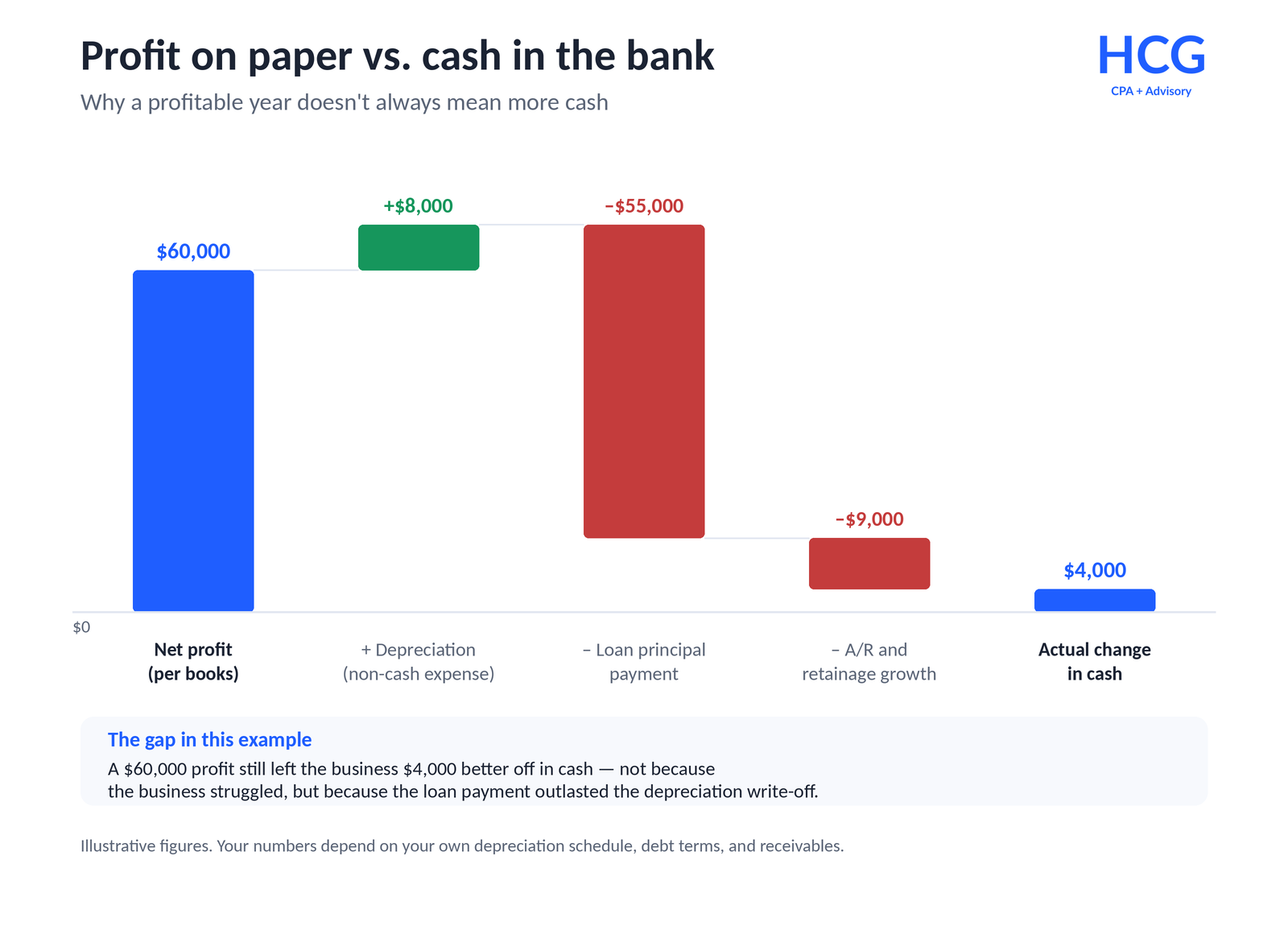
Depreciation is an accounting expense. It spreads the cost of equipment over its useful life, and it reduces your profit on paper, but no actual cash leaves the business when depreciation is recorded.
The loan payment on that same equipment, or in this case, the payment on the business itself, is a real cash outflow. It leaves your bank account every month whether or not it matches what's happening on your income statement.
For a few years after a purchase, these two often track reasonably close together, so a profit roughly lines up with the cash in the bank. The problem shows up when the timelines diverge, which they almost always eventually do. In the repair shop's case, the equipment and the business purchase were being paid off over a longer period than the equipment was being depreciated for tax and accounting purposes. The write-off ran out well before the payments did.
Once that happened, the income statement kept showing a profit, since the depreciation expense had dropped off or shrunk, but the loan payment hadn't. That payment was still going out every month, in cash, with nothing left on the income statement to explain where it was going. The owner wasn't imagining the problem. The profit was real. The cash was also really leaving. The two numbers had just stopped being the same conversation.
This is one version of a common pattern
We see this same disconnect show up for different reasons across our client base:
- A construction company finishes a profitable job but is still waiting on retainage, so the profit is recognized before the cash arrives.
- A restaurant has a strong month on paper, but inventory purchases, a slow payroll week, and a loan payment all land in the same few days.
- Any business carrying debt on equipment, vehicles, or the business itself can see depreciation and loan payments drift apart exactly the way the repair shop did.
The common thread: profit and cash flow are two different measurements, and nothing requires them to move together. Profit tells you whether the business model works. Cash tells you whether you can make payroll next Friday. A business can be right on one and wrong on the other.
Why this gets missed
A tax return is built to answer a tax question. It is not built to answer "where did my cash go?" Depreciation is exactly the kind of number that looks like good news on a return, since it lowers taxable income, while quietly hiding the fact that a cash obligation it used to offset has outlived it.
This is the kind of thing that's easy to miss if the only time someone looks closely at your numbers is once a year, in March, with last year's return as the goal. By the time a return is filed, the gap between profit and cash has usually been building for months, sometimes years, as it was for the repair shop.
What we actually look at
When we see profit and cash diverging, a few things get checked:
- Does your depreciation schedule still match your debt schedule? If equipment or a business purchase is financed over a longer term than it's depreciated, this gap is coming, and it helps to know when.
- What's tied up in accounts receivable or retainage that's been counted as income but hasn't hit your bank account yet.
- Are loan principal payments being tracked separately from loan interest? Only the interest portion is deductible, so the principal payment is a cash outflow that never shows up as an expense at all, which can make this exact disconnect worse than it looks.
- A simple cash flow forecast, so instead of being surprised months later, you see a gap like this coming while there's still time to plan around it, whether that means adjusting pricing, refinancing debt, or just knowing what's ahead.
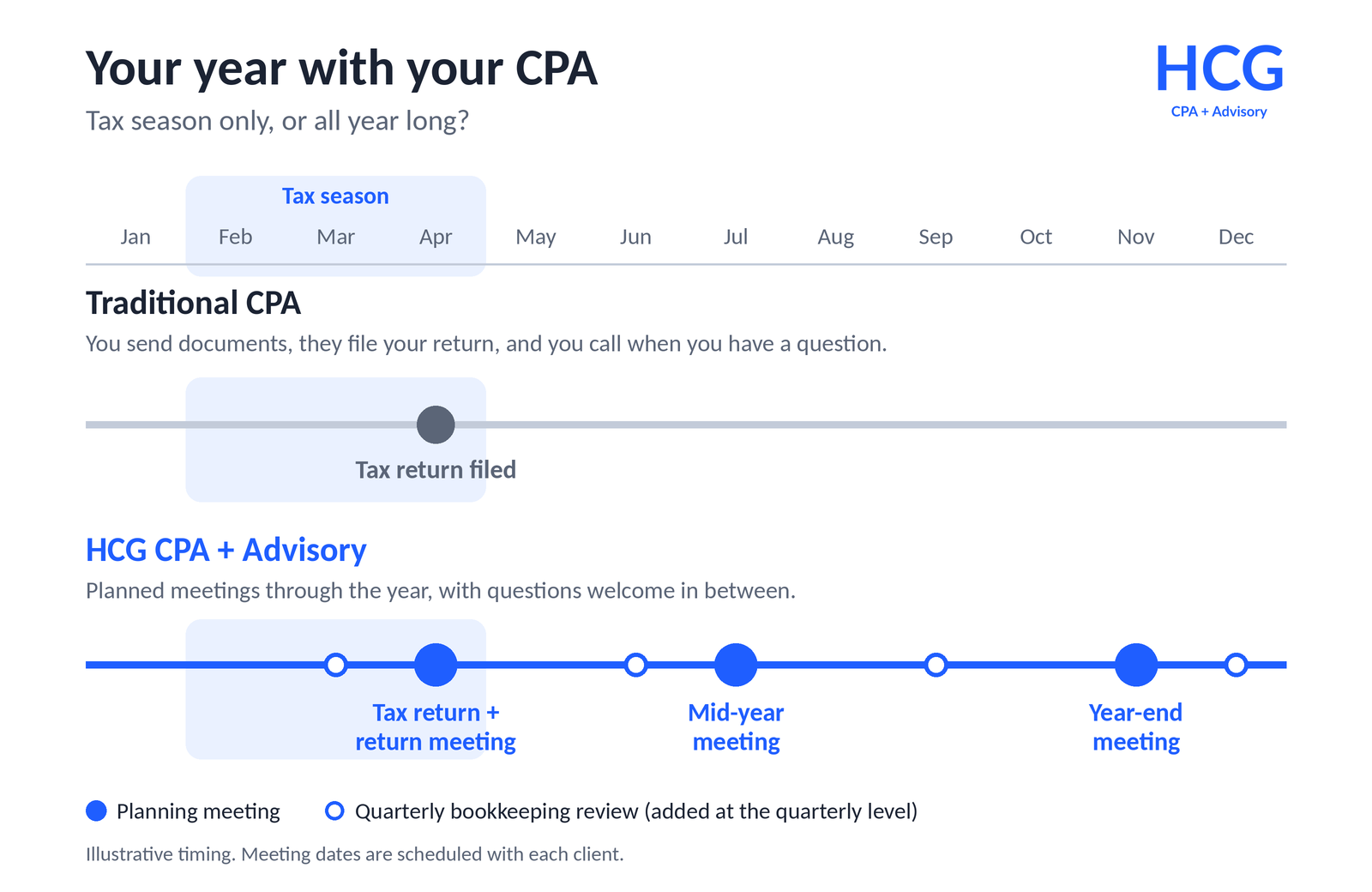
This is exactly what the mid-year and year-end meetings in our advisory services are built to catch, and part of why clients on our quarterly review level keep their books current enough to see it early. For businesses where cash flow forecasting and debt structure are a bigger, ongoing part of the picture, that's where our fractional CFO services come in.
If your numbers don't quite make sense to you
If you've looked at a profitable year and still felt like the cash doesn't add up, you're not missing something obvious. These two numbers are allowed to disagree, and most business owners are never shown why.
Schedule a conversation and we'll look at whether your depreciation and debt schedules still line up. For the broader difference between a CPA who files your return and one who catches this kind of thing while it's still fixable, see what advisory accounting means.
Michael Hunsche, CPA, founded HCG CPA + Advisory in 2017 and works with owner-managed businesses across Northeast Indiana and beyond.
View More of Our Most Recent Posts