The last thing I expected on the third hole.
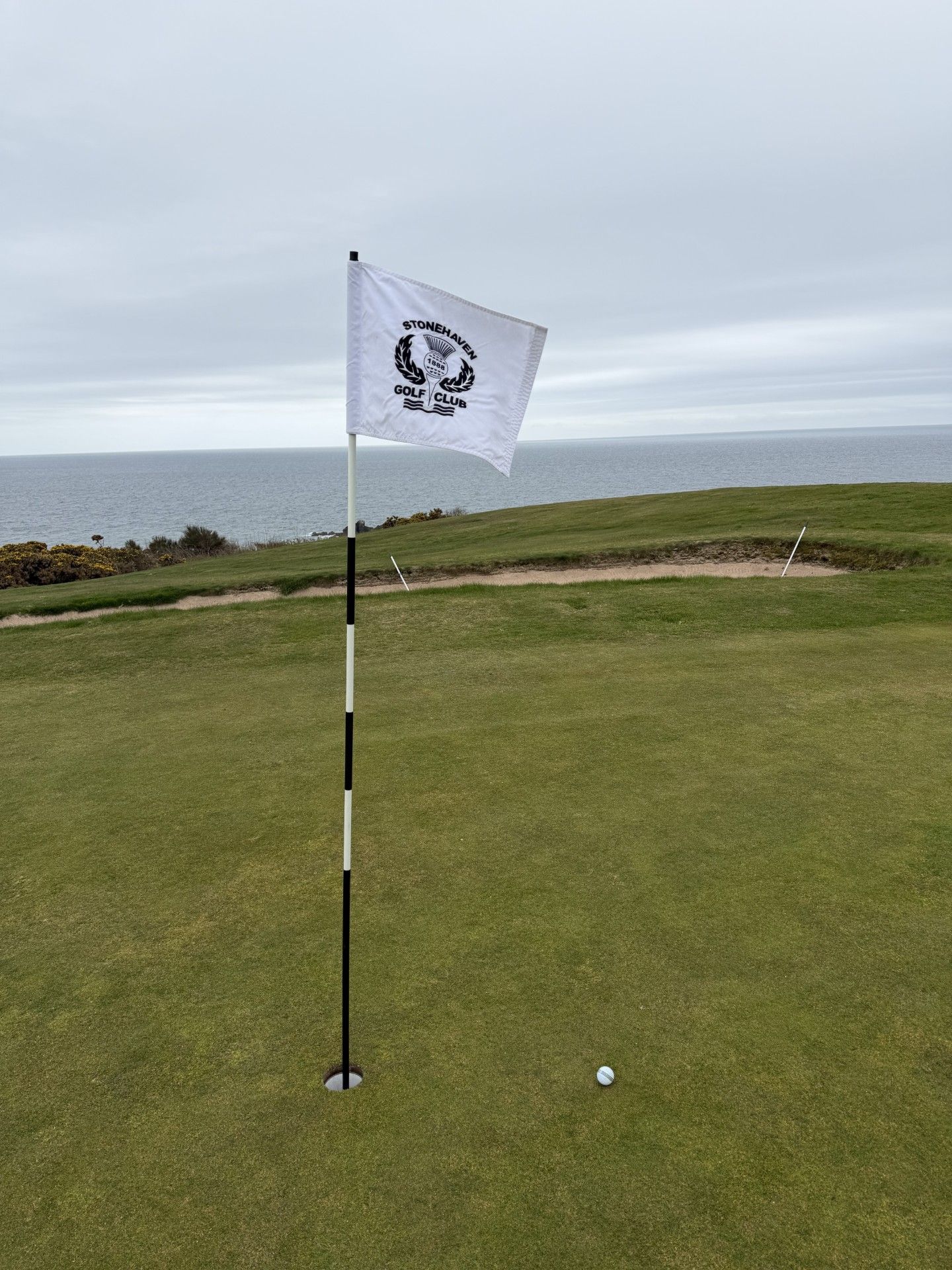
Peterhead Golf Club sits on Scotland's northeast coast. It's the 18th oldest golf club in the world, a true links course dating back to 1841. In Scotland, carts (or buggies, as they call them) are rare. Most courses limit them or don't allow them at all. So I expected a walking course full of tradition.
Then, on the third hole, I saw something I didn't expect. Two- and three-wheeled single-rider cycles. What surprised me more was who was riding them. They weren't kids or first-timers. They were mostly older golfers who wanted to keep playing on their own, at their own pace, without needing a partner to share a cart. Here was one of the oldest clubs in the world using equipment that plenty of American courses with a fraction of the history won't touch because it's "too new."
Tradition isn't a business plan
If a club that's been around since 1841 can make room for single-rider cycles, a course in northeast Indiana can too. Peterhead didn't treat new equipment as a threat to the game. They treated it as a way to keep golfers on the course. Every older member who can still play solo is a member who keeps paying dues, keeps booking rounds, and keeps stopping at the bar afterward.
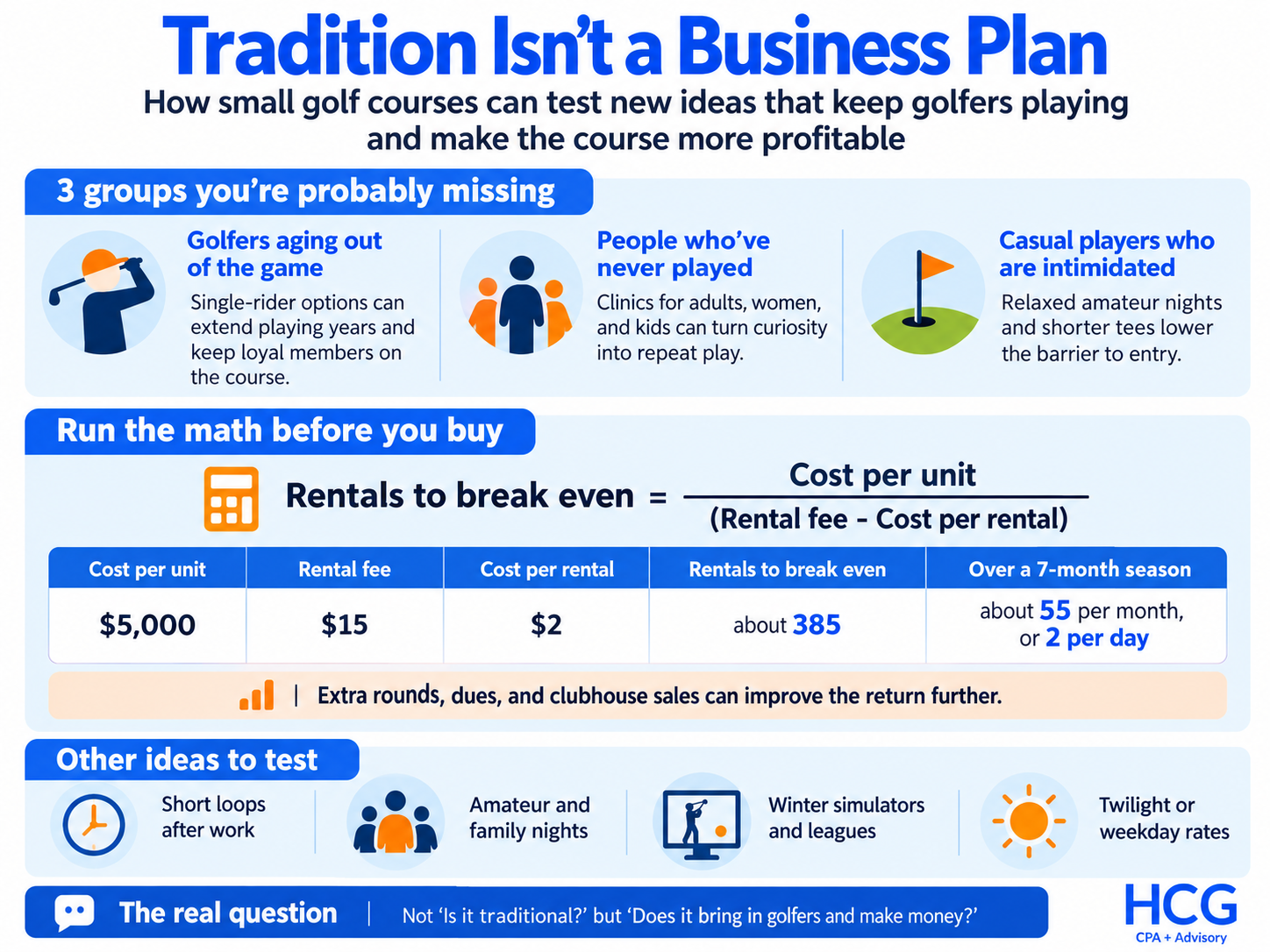
That's the mindset shift for courses all over the states, including Northeast Indiana. The question isn't "is this traditional?" The question is "does this bring in golfers and make money?"
Three groups you're probably missing
Our area doesn't have a huge golf culture, we aren't Kohler Wisconsin drawing in thousands per week to play our courses. That means a small course can't grow by waiting for more traditional golfers to show up. It has to widen the door.
- Golfers aging out of the game. These are your most loyal customers. A single-rider option like a Finn Cycle can add years to their playing life, and it keeps them from needing a partner just to get around.
- People who've never played. Learn-to-play clinics for adults, women's groups, and kids turn the curious into regulars. Today's beginner is next year's league member.
- Casual players who are intimidated. Amateur nights from shorter tees, with relaxed rules and music, give people a low-pressure way to try the game. Most of them would never book a standard tee time.
- Simulators. Every single golf course should have a simulator and bays in Northern Indiana. There is an entire industry being built simply on the fact that courses won't invest their money.
Run the math before you buy
New doesn't mean you should buy blindly. Every new offering is its own small business, and it should pay for itself.
The basic test is a break-even count:
RENTALS TO BREAK EVEN = Cost per Unit / (Rental Fee - Cost per Rental)
Here's an example with made-up round numbers. Plug in your own quotes before deciding anything.
Cost per unit $3,000
Rental fee $20
Cost per rental (charging, cleaning, wear) $2
Rentals to break even about 167
Over a seven-month season about 24 a month, or 6 per week
6 rentals a week is a very reachable number for a course with even a handful of regulars. And that doesn't count the extra rounds, dues, and 19th-hole sales from golfers who would otherwise have stopped playing.
The same test works for clinics and amateur nights. Add up the staff, marketing, and supplies, then figure how many players you need to cover them.
More ideas the old guard won't love
- Short loops after work. A 6- or 7-hole option for people who don't have four hours. (subject to courses that have the ability to form a loop)
- Amateur and family nights. Forward tees, music, and a food special from the clubhouse.
- Winter simulators and leagues. Revenue in the months when the course sits idle - this is something every single course should offer immediately.
- A twilight or weekday rate. Not a full pricing strategy, just a simple way to fill quiet times. Golfers think they are getting a deal and you are selling time slots that didn't exist before.
Not every idea fits every course. The point is to test them one at a time, track the numbers, and keep what works.
If 1841 can change, so can we
Peterhead showed me that respecting the game and growing the business aren't opposites. The oldest clubs survive because they keep finding ways to get people on the course.
At HCG CPA + Advisory, we help course owners decide which ideas are worth the investment before they spend. We run the break-even numbers, build the budget, and track the results through the season in our quarterly review relationship. For courses that want a full plan, our fractional CFO service goes further.
If you run a small course in northeast Indiana and you're wondering whether that new idea will pay off, let's run the numbers together. And for more stories from courses around the world, follow along at Beyond the Fairway.
Michael Hunsche, CPA, is the founder of HCG CPA + Advisory in Fort Wayne
View More of Our Most Recent Posts