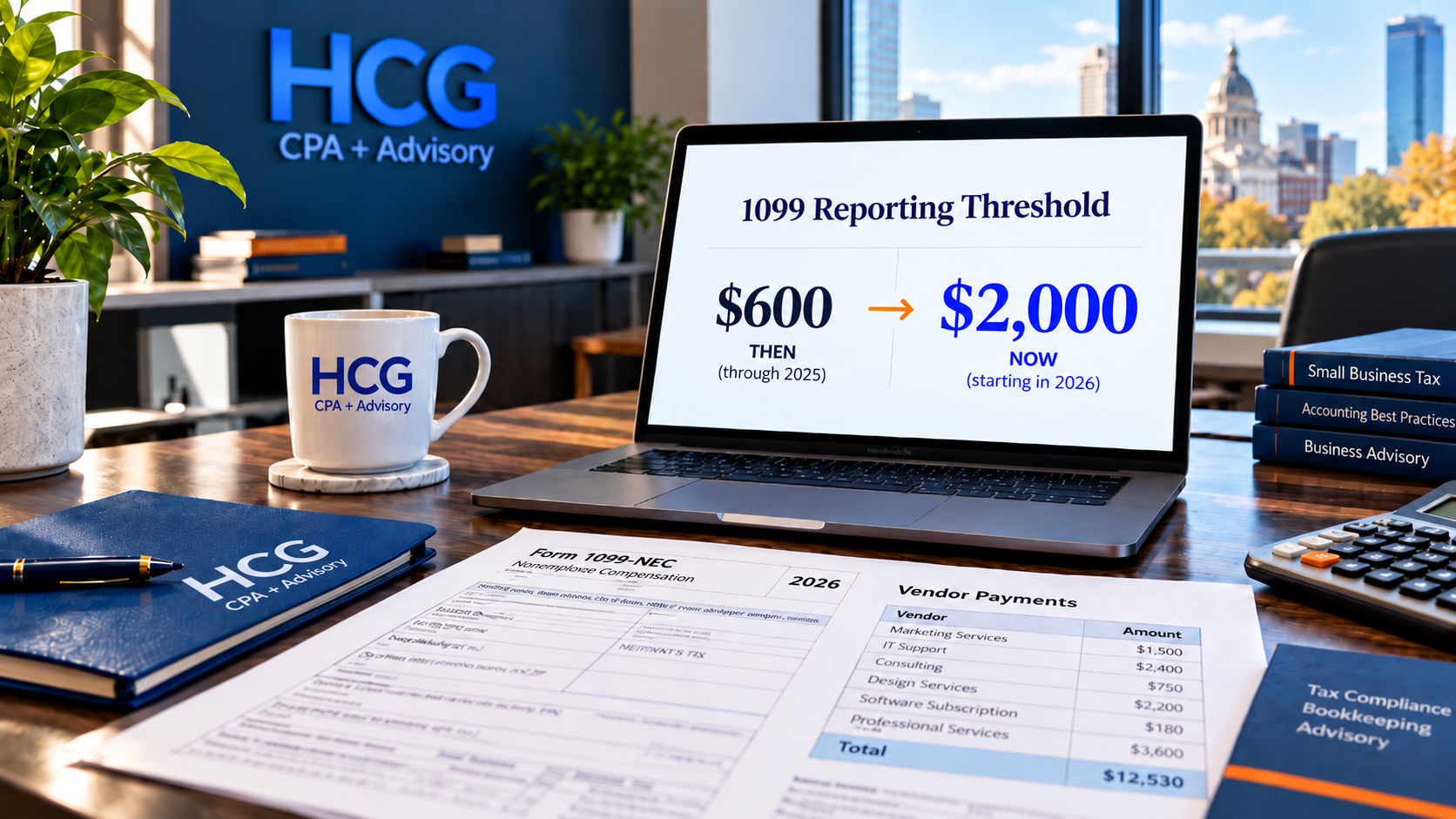
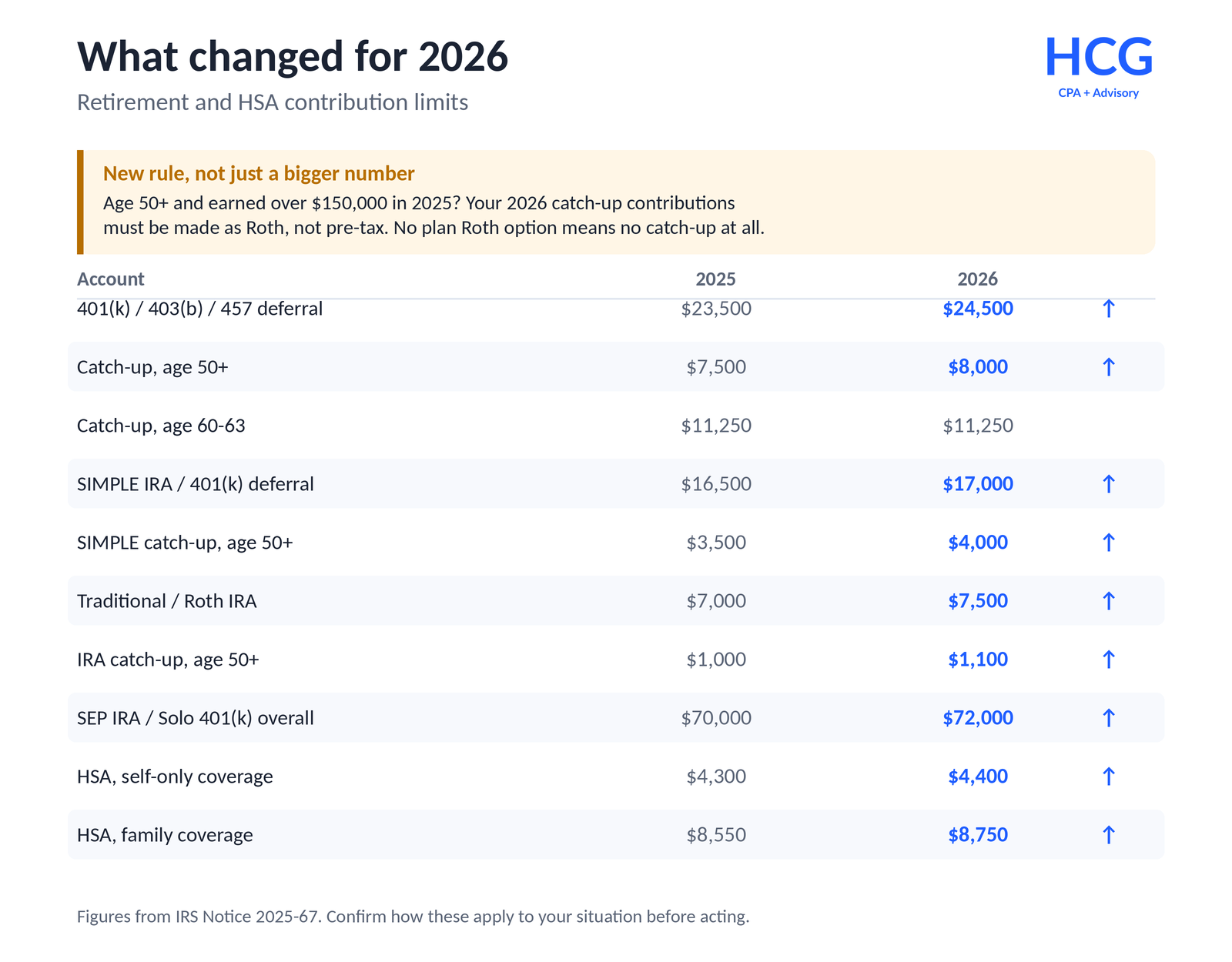
As tax season approaches, businesses must pay close attention to IRS information reporting requirements — particularly when it comes to Form 1099. These forms report various types of income paid to non-employees and service providers, and failing to file them correctly and on time can result in costly penalties. At Hunsche CPA Group we help clients navigate 1099 requirements with confidence and accuracy.
What Is a 1099 Form?
A 1099 is an IRS information return used to report income paid that is not reported on a W-2. The most common form is 1099-NEC, which reports nonemployee compensation (e.g., payments to independent contractors). Other versions include 1099-MISC, 1099-INT (interest), 1099-DIV (dividends), and more.
Who Must File a 1099?
You must file a 1099 if, during the tax year, you made payments to vendors or individuals in the following situations:
- Independent contractors and freelancers: $600 or more in nonemployee compensation (Form 1099-NEC).
- Rent or lease payments: $600 or more (Form 1099-MISC).
- Prizes, awards, or other income payments: $600 or more.
- Attorneys and medical service providers: Payments of $600 or more in the course of business.
Key distinction: 1099s are required for business payments — not personal transactions.
Important Deadlines
Understanding and meeting IRS deadlines is critical:
- Form 1099-NEC:
- Furnish to recipients by January 31
- File with the IRS by January 31
- Other 1099 Forms (e.g., 1099-MISC):
- Furnish to recipients by January 31
- File with the IRS (paper or electronic) by February 28 (paper) or March 31 (electronic)
Deadlines do not always align, so it's important to plan ahead.
How Many Forms Must You File?
If you issue 250 or more information returns, the IRS requires electronic filing. Even if you have fewer than 250 forms, e-filing is strongly recommended — it’s faster, more efficient, and often more secure.
IRS Penalties: Don’t Let Mistakes Cost You
Failing to file accurate and timely 1099s can trigger penalties that quickly add up. Here’s a breakdown of the key penalty categories for 2025 (subject to IRS adjustment each year):
1. Late Filing Penalties
The penalty depends on how late the correct form is filed with the IRS:
- Filed within 30 days after the due date: $60 per form
- Filed more than 30 days late but by August 1: $120 per form
- Filed after August 1 or not at all: $310 per form
These amounts per form can escalate quickly for businesses with many contractors. It is worth noting that the IRS issues penalties per form, which they consider as one form going to the recipient and one form going to the IRS. This means for every payee these fines are double as there are two forms per payee.
2. Failure to File
If you simply do not file the required 1099s, the IRS treats it as a failure to file — penalties start at the highest tier: $310 per form.
3. Intentional Disregard
If the IRS determines that a business intentionally disregarded the filing requirement, there is no maximum penalty — at minimum, $630 per information return, and often more.
4. Failure to Furnish to Recipient
Penalties can also apply if you fail to give the recipient their copy of the 1099 on time:
- Same penalty amounts as late filing: $60 to $310 per recipient.
Tips to Avoid Penalties
Here are practical steps to stay compliant:
- Collect W-9 forms early — before paying a vendor or contractor
- Track payments throughout the year
- Use accounting software that supports 1099 reporting
- Consider e-filing to reduce errors and delays
- Work with a CPA or tax professional
Wrap-Up: Compliance Pays
Accurate 1099 reporting protects your business from penalties and helps maintain strong relationships with contractors and vendors. The time to prepare is well before January 31, so you’re never rushed or at risk of costly errors. There is no penalty for issuing a 1099 when not required, so when in doubt, prepare the forms.
Many small businesses face the decision of hiring quality help when the recipient does not want to give their SSN for tax purposes. This often leads to the vendor costing the business much more than just their fees. Our best practices encourage business owners to consider that if someone does not want to give you their reporting information, they are probably too expensive in the long run to hire.
If you have questions about 1099 filing requirements, deadlines, or strategies to stay compliant, contact Hunsche CPA Group — we’re here to help.