How Business Owners Can Grow Their Companies with CPA Services


Michael Hunsche • October 20, 2025

Share this article

Running a business takes more than determination — it requires clear insight into your financial position and a plan for sustainable growth. That’s where HCG comes in. A good CPA firm is more than a tax preparer; it’s a strategic partner that helps you make better decisions, manage risk, and uncover opportunities for expansion.


1. Turning Financial Data Into Business Strategy

Your CPA doesn’t just organize your books — they interpret your financial information to help you make smarter business decisions. Regular financial reviews can highlight which products, services, or clients are most profitable and where costs can be trimmed.


By analyzing performance metrics such as cash flow, gross margin, and return on investment, a CPA can help you identify growth levers and prioritize investments that drive long-term success. Businesses that use financial analysis to guide decision-making are far more likely to experience sustained growth than those that operate reactively.


2. Building Stronger Cash Flow and Profitability

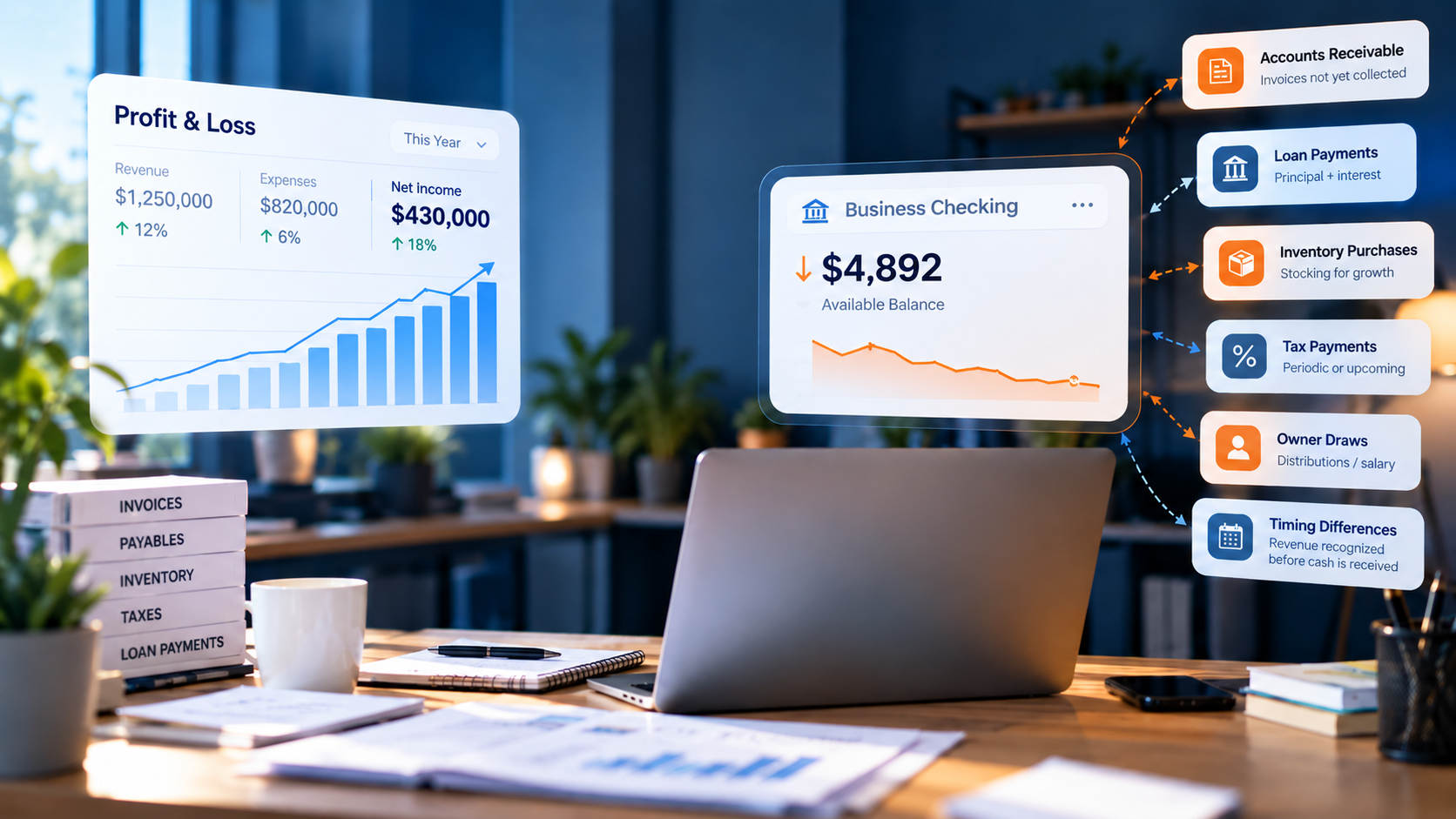
Cash flow is the lifeblood of every business. A CPA can help you forecast and manage it effectively — ensuring you have the capital to seize opportunities or weather downturns.


According to a widely-cited U.S. Bank study by Jessie Hagen, approximately 82% of business failures are due to poor cash-flow management or a lack of understanding of cash flow. While the exact study is often referenced rather than directly published, it underscores a crucial truth: businesses that monitor and manage cash flow proactively are far more likely to succeed.


With professional CPA guidance, you can track incoming and outgoing funds, plan for tax obligations, and avoid liquidity crises that stunt growth.


3. Proactive Tax Planning That Frees Up Capital

Tax planning isn’t just about minimizing liability — it’s about freeing resources for reinvestment. A CPA can help you structure your business, manage deductions, and take advantage of federal and state credits (such as R&D or energy incentives) to improve cash flow.


By engaging in ongoing tax planning rather than waiting until filing season, businesses can reinvest savings into marketing, technology, or expansion — all key growth drivers.


4. Better Access to Financing and Investment

When you need funding to expand, accurate and professional financial statements are essential. Lenders and investors rely on credible numbers. A CPA-prepared financial package signals that your business is well-managed and trustworthy.


The Small Business Administration notes that businesses with well-organized financial records are far more likely to secure loans and attract investors, underscoring the role of professional accounting in accessing capital.


5. Improved Decision-Making Through Regular Meetings

Regular meetings with your CPA are not administrative check-ins — they’re growth strategy sessions. Reviewing financial performance quarterly or monthly allows you to make timely adjustments rather than waiting until year-end.


Consistent collaboration helps you:


Spot inefficiencies before they impact profitability

Adjust pricing and cost structures quickly

Evaluate new market opportunities

Set realistic, data-driven goals


The result? A more agile, informed, and resilient business.


6. Risk Management That Protects Growth

Growth is only sustainable when it’s protected. CPAs help identify and mitigate financial and compliance risks before they become costly problems. From ensuring payroll compliance to structuring insurance and internal controls, their expertise provides peace of mind — allowing you to focus on innovation and expansion.


Final Thoughts

Your CPA can be one of the most valuable members of your business team. By engaging them proactively — not just at tax time — you gain a strategic ally who helps you plan, measure, and sustain growth.


At Hunsche CPA Group, we believe every business owner deserves to make financial decisions with confidence. Whether you’re planning to expand, strengthen cash flow, or prepare for the future, our team is here to help you turn your financial data into a roadmap for success.


Contact us today to get started!

View More of Our Most Recent Posts

By Michael Hunsche August 18, 2026
In my last post, I talked about starting this firm from the back of a closet with one client, a makeshift desk, and an old power strip. But I didn’t start a CPA firm because I had always dreamed of owning a CPA firm. I started it because the traditional model didn’t make sense to me — especially after starting a small side business of my own and seeing things from the business owner’s side. Clients would send information into a black hole and wonder when they would hear back. Business owners would meet with their accountant after the year was already over, when most of the opportunities to actually change the outcome were gone. Large firms often reserved their best advice and attention for their largest clients, even though smaller business owners arguably needed that guidance more. Tax returns became the service instead of what I believed they should be: the end result of conversations happening throughout the year. And too often, the accountant knew the numbers but didn’t really know the business. None of that made sense to me. I thought a CPA firm could be more than the place you send documents once a year. I thought we could help business owners make better decisions before those decisions showed up on a tax return. That idea became the foundation of the firm. Pricing was another problem. At the first firm I worked for, we had “dynamic” pricing. In practice, that could mean charging a client more after a good year to supposedly make up for years when their bill had been discounted. Other clients might go an incredibly long time without receiving a bill, only to suddenly get hit with a huge invoice. As someone trying to run a business myself, I couldn’t understand that. How could a business owner budget for a professional relationship without knowing what it was going to cost? The traditional model was built around billing for time, yet employees were constantly being told to work faster. That created the wrong incentives. The focus became completing the deliverable efficiently instead of asking what else the client needed to know. Payroll could become an afterthought. Bookkeeping could become work used to fill the slower months. Questions about a client’s history could be viewed as time taking away from the task at hand. The system rewarded completing work. I wanted a system that rewarded helping the client. So when I started the firm in 2017, the concept was pretty simple. Find out what the client actually needs. Agree on the scope. Give them a predictable monthly price. Review that relationship every 9–12 months and adjust when their needs change. And most importantly, don’t disappear between tax returns. From the beginning, I wanted the relationship to include tax return preparation, mid-year tax planning, year-end planning, and responsive communication throughout the year. At the time, proactive planning and upfront pricing were far less common in the small-business CPA market. A business owner getting a call that said, “Let’s meet in July and see how the first half of the year went,” was not the experience many owners expected from their accountant. But it made perfect sense to me. If we waited until tax season to have that conversation, we weren’t planning anymore. We were reporting history. The response was great — once I could get business owners to give a new firm a chance. Over time, that simple concept grew into something much bigger. People smarter than me helped develop it into what the profession now broadly calls advisory, with a much wider scope and greater ambition than what I originally envisioned. But the underlying idea hasn’t changed. Business owners deserve to know what they’re paying. They deserve honest advice, even when the answer isn’t what they expected. They deserve regular conversations about what is happening in their business and what is coming next. And they deserve a CPA who understands that the goal isn’t simply to produce an accurate tax return. The goal is to help them make better decisions before we get there. That’s why I started the firm. Transparent pricing. Honest advice. Regular conversations.  Built for Business Owners. CPA Led. Strategy Focused.
By Michael Hunsche August 14, 2026
An old power strip from my beginning became an unexpected reminder of how easy it is for business owners to overlook how far they’ve come.
By Michael Hunsche August 11, 2026
Our family-owned CPA firm started with almost no clients, no employees, and a closet for an office. Here’s why we started—and what hasn’t changed.